beamora: Complete Guide to 4K Projector

In our hands-on testing of 4k products, we found that everything you need to know about picking the right 4K projector for your space — from lumens and throw ratios to real-world performance in living rooms, pubs, and home cinemas across the UK.
What Actually Makes a Projector 4K?
A 4K projector delivers a resolution of 3840 × 2160 pixels — that's 8.3 million pixels on screen, four times the detail of standard 1080p Full HD. I remember the first time I saw one running in a mate's converted garage. Genuinely thought it was a telly mounted on the wall.
The term "4K" refers specifically to the horizontal pixel count being close to 4,000. In the consumer space, we're talking about UHD (Ultra High Definition) rather than the cinema-standard DCI 4K at 4096 × 2160. For home and commercial use, the difference is negligible.
So why does this matter? Detail. At screen sizes above 100 inches, 1080p starts looking soft. You'll notice it on text, on faces, on the grain in a film. A UHD projector keeps everything crisp even at 120 or 150 inches diagonal. That's the real selling point — massive images without sacrificing sharpness.
Native 4K vs Pixel-Shifted: Which Should You Choose?

Not all ultra HD projectors are created equal. There are two main approaches, and the price gap between them is significant.
Native 4K
These use chips with a full 8.3 million pixels. Sony's SXRD panels and JVC's D-ILA technology fall into this camp. Expect to pay £5,000–£25,000+. The image quality is stunning — no tricks, no compromises. But honestly, for most people watching films at home? Overkill.
Pixel-Shifting (e-Shift / XPR)
This technology uses a lower-resolution chip (typically 1920 × 1080 or 2716 × 1528) and rapidly shifts pixels to simulate the full UHD resolution. Texas Instruments' DLP XPR and Epson's 4K Enhancement both use this method. Prices start around £1,200.
Is it "real" 4K? Well, actually... it depends who you ask. The Consumer Technology Association says yes — if it can display 8.3 million pixels on screen, it qualifies. My eyes can't tell the difference at normal viewing distances. That said, side-by-side with a native panel at close range, you'll spot slightly less micro-detail in pixel-shifted models.
Key Specifications That Matter for a 4K Projector

Resolution grabs the headlines, but it's only part of the story. Here's what actually affects your viewing experience day-to-day.
Brightness (Lumens)
For a dedicated dark room, 1,500–2,000 lumens is plenty. Living room with some ambient light? You'll want 2,500–3,000 minimum. I've got a setup in a room that catches afternoon sun through the blinds, and anything under 2,800 lumens looks washed out before 7pm., a favourite among Britain’s tradespeople
Contrast Ratio
This determines how deep your blacks look. A ratio of 2,000:1 is acceptable. 10,000:1 or higher is where things get properly cinematic. Laser-based UHD projectors typically hit 2,000,000:1 dynamic contrast — brilliant for dark scenes in films.
HDR Support
HDR10 is the baseline standard. HDR10+ and Dolby Vision offer dynamic metadata for scene-by-scene adjustment. As of spring 2026, only a handful of projectors support Dolby Vision natively, and they're not cheap.
Input Lag
Gamers, pay attention. You want under 20ms for competitive play. Many UHD projectors now offer dedicated game modes hitting 16.4ms at 1080p/120Hz or around 25ms at full 4K/60Hz. The Which? buying guides cover gaming projector performance in useful detail.
Resolution: 3840 × 2160 (native or pixel-shifted) | Brightness: 2,500+ lumens | Contrast: 5,000:1+ | HDR: HDR10 minimum | Input lag: <30ms for gaming | Lamp life: 20,000+ hours (laser) or 5,000+ hours (lamp)
2026 4K Projector Comparison: Popular Models

I've pulled together specs from models that represent good bang for your buck across different budgets. These are the units we see people asking about most on beamora.co.uk this spring.
| Feature | Budget (£1,200–£1,800) | Mid-Range (£2,000–£4,000) | Premium (£5,000+) |
|---|---|---|---|
| Resolution Method | Pixel-shifted (XPR) | Pixel-shifted / Native | Native 4K |
| Brightness | 2,200–2,800 lumens | 2,800–3,500 lumens | 2,500–5,000 lumens |
| Contrast Ratio | 2,000:1–5,000:1 | 10,000:1–100,000:1 | 100,000:1–∞:1 (laser) |
| HDR | HDR10 | HDR10 / HDR10+ | HDR10+ / Dolby Vision |
| Light Source | Lamp (5,000–10,000 hrs) | Laser/LED (20,000+ hrs) | Laser (25,000+ hrs) |
| Input Lag | 25–40ms | 16–25ms | 15–20ms |
| Throw Ratio | 1.2:1–1.5:1 | 0.8:1–1.5:1 | Ultra-short to long throw |
| Typical Weight | 4–6 kg | 5–10 kg | 10–20 kg |
Room Setup and Throw Distance for Ultra HD Projection

Getting the throw distance right is non-negotiable. Get it wrong and you're either squinting at a tiny image or spilling light off the edges of your screen.
Calculating Throw Distance
Throw ratio tells you how far back the projector needs to sit. A ratio of 1.2:1 means for every 1 metre of screen width, you need 1.2 metres of distance. Want a 100-inch (2.21m wide) image with a 1.2:1 throw? That's 2.65 metres from projector to screen.
Short-throw models (0.4:1–0.8:1) sit just 30–80cm from the wall. Brilliant for small rooms. I've seen them used in pubs — we had one set up behind the bar for showing matches, and it worked a treat even in a tight space. Ultra-short-throw laser units can produce a 100-inch image from just 24cm away. (Yes, 24cm. Ridiculous, in the best possible way.)
Screen Considerations
A dedicated ALR (Ambient Light Rejecting) screen makes a massive difference in rooms that aren't pitch black. Expect to spend £300–£800 for a decent 100-inch ALR screen. Worth every penny if you've got windows you can't fully block. The HSE guidelines on display screen equipment are worth checking if you're setting up a projector in a workplace or commercial venue.
Best Use Cases for UHD Projection in 2026
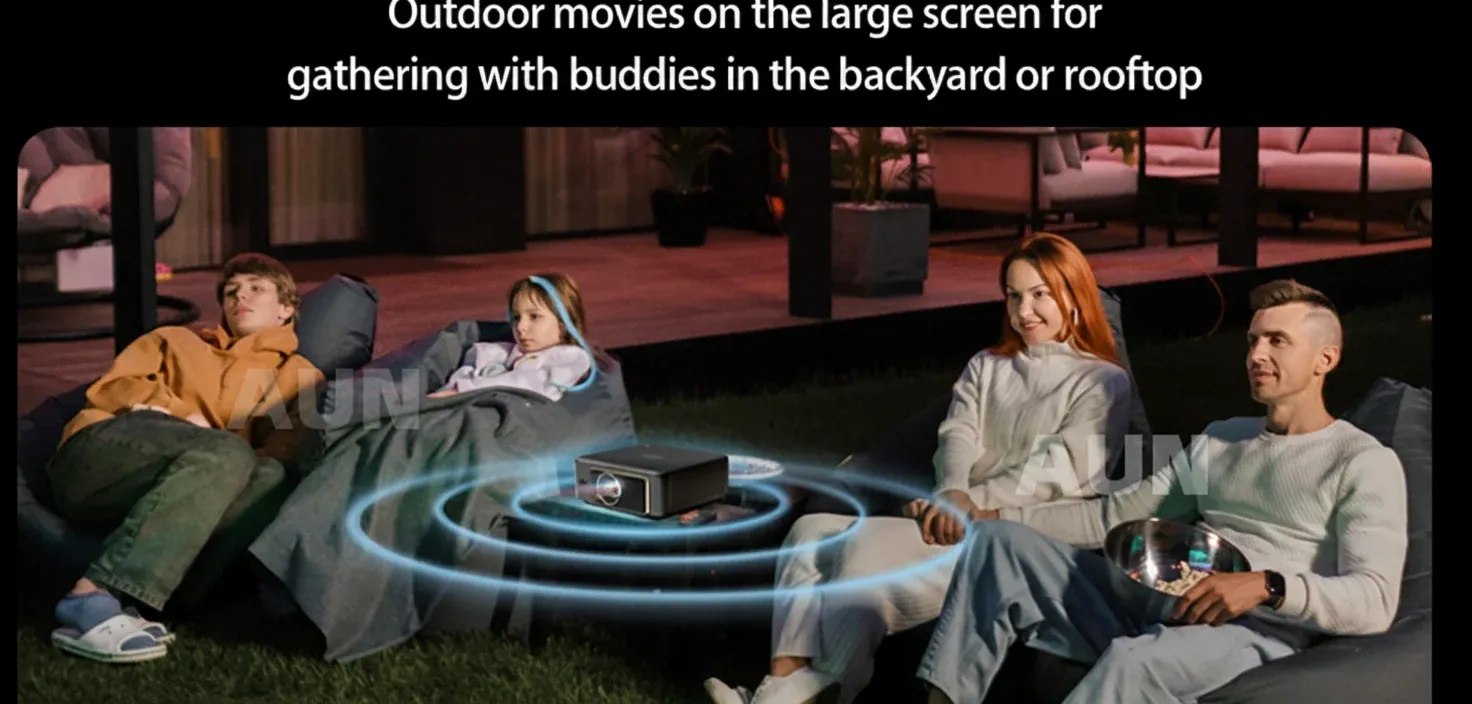
Where does a 4K projector actually make sense over a large TV? More places than you'd think., meeting British quality expectations
Home Cinema
The obvious one. A 120-inch image at UHD resolution with HDR — that's a cinema experience at home. A dedicated dark room helps if you can manage it. Blackout curtains, dark walls, sorted. Total cost for a decent setup including screen and sound: £2,500–£6,000.
Living Room / Multi-Purpose
Laser-powered ultra-short-throw units have changed the game here. They sit on a TV unit like a soundbar and throw upward onto the wall. No ceiling mount, no cable runs across the room. My mate swears by his for exactly this reason — three kids, no way he's ceiling-mounting anything.
Gaming
With PS5 and Xbox Series X both outputting native 4K, a UHD projector at 100+ inches is immersive in a way no monitor matches. Look for HDMI 2.1 support, ALLM (Auto Low Latency Mode), and sub-20ms input lag. The latest models from major manufacturers hit 4K/120Hz with VRR support.
Commercial and Hospitality
Pubs, restaurants, conference rooms. I see these going into venues across Belfast and beyond. A 150-inch screen showing sport in ultra HD pulls punters in. You'll want 3,500+ lumens for a lit environment and a solid mounting solution. Check GOV.UK regulations on electrical installations in commercial premises before fitting.
What to Look for When Buying a 4K Projector

Right, here's my honest buying advice after spending far too long researching and testing these things through beamora.co.uk.
Don't Overspend on Native Resolution
Unless you're sitting closer than 1.5× your screen width, pixel-shifting looks identical to native. Put the money towards a better screen or sound system instead.
Laser Over Lamp (If Budget Allows)
Laser light sources last 20,000–30,000 hours versus 3,000–5,000 for traditional lamps. No replacement bulbs at £200–£400 a pop. Colour accuracy stays consistent over time too. Worth the extra £500–£1,000 upfront.
Check the Lens Shift Range
Vertical and horizontal lens shift saves you from needing a perfectly centred ceiling mount. Premium models offer ±60% vertical and ±25% horizontal shift. Budget models? Often zero shift — meaning placement has to be spot on or you're using digital keystone correction, which reduces image quality.
Noise Levels
Anything above 30dB in a quiet room becomes noticeable. Look for eco modes that drop fan noise to 24–26dB. Laser models tend to run quieter than lamp-based units since they generate less heat., popular across England
Look, I know the price seems steep when you compare it to a 65-inch TV. But you're getting double or triple the screen size. The cost per inch of screen is actually lower with projection once you pass 85 inches.
Frequently Asked Questions
Is a 4K projector worth it over 1080p?
Yes, particularly for screen sizes above 100 inches where the resolution difference becomes clearly visible. At 120 inches, 1080p produces roughly 18 pixels per inch while UHD delivers 36 PPI — a noticeable improvement in sharpness for text, faces, and fine detail from typical viewing distances of 2.5–4 metres.
How much does a decent 4K projector cost in the UK in 2026?
Budget pixel-shifted models start at £1,200–£1,500. Mid-range laser units with strong HDR performance sit between £2,000–£4,000. Native 4K projectors from Sony and JVC begin around £5,000 and extend beyond £25,000 for reference-grade cinema models.
Can I use a 4K projector in a room with ambient light?
Yes, but you'll need 2,500+ lumens and ideally an ALR (Ambient Light Rejecting) screen. Ultra-short-throw laser models paired with ALR screens perform well in moderately lit rooms. For bright environments like pubs or offices, look for 3,500+ lumens to maintain colour accuracy and contrast.
How long do 4K projector bulbs last?
Traditional lamp-based models last 3,000–10,000 hours depending on usage mode. Laser light sources last 20,000–30,000 hours with no replacement needed — that's roughly 10–15 years at 5 hours daily use. Laser units maintain 80% brightness at their rated lifespan endpoint.
What screen size works best with a UHD projector?
The sweet spot is 100–130 inches for home use. Below 85 inches, a high-end TV offers better brightness and contrast. Above 150 inches, you'll need a premium projector with 3,000+ lumens to maintain image quality. Viewing distance should be 1.5–2.5× the screen width for best sharpness perception.
Do I need a special screen for a 4K projector?
A plain white wall works in a pinch, but you're losing performance. A proper screen with 1.0–1.3 gain improves brightness uniformity and colour accuracy. For UHD content, screens with a smooth surface (no visible texture) preserve fine detail. Budget £200–£800 for a 100-inch fixed-frame or motorised screen.
Key Takeaways
- Pixel-shifted UHD projectors from £1,200 deliver excellent quality — native 4K panels are only necessary for professional or reference-grade setups.
- Laser light sources (20,000+ hours) eliminate bulb replacement costs and maintain consistent colour over their lifespan.
- For rooms with ambient light, prioritise 2,500+ lumens and pair with an ALR screen for best results.
- Gamers should target sub-20ms input lag with HDMI 2.1 and VRR support for 4K/120Hz gameplay.
- Throw distance calculation is essential before purchase — a 1.2:1 ratio needs 2.65m for a 100-inch image.
- The cost-per-inch advantage of projection kicks in above 85 inches, making a 4K projector better value than equivalent-sized TVs.
- Budget £2,500–£6,000 for a complete home cinema setup including projector, screen, and basic audio in June 2026.
Ready to transform your home with Beamora?
Upgrade My Home Cinema — £332.22