DLP Rainbow Effect Explained: Why Some People See It and What to Do Next
Direct answer: sequential colour on single-chip DLP can create brief rainbow flashes for some viewers
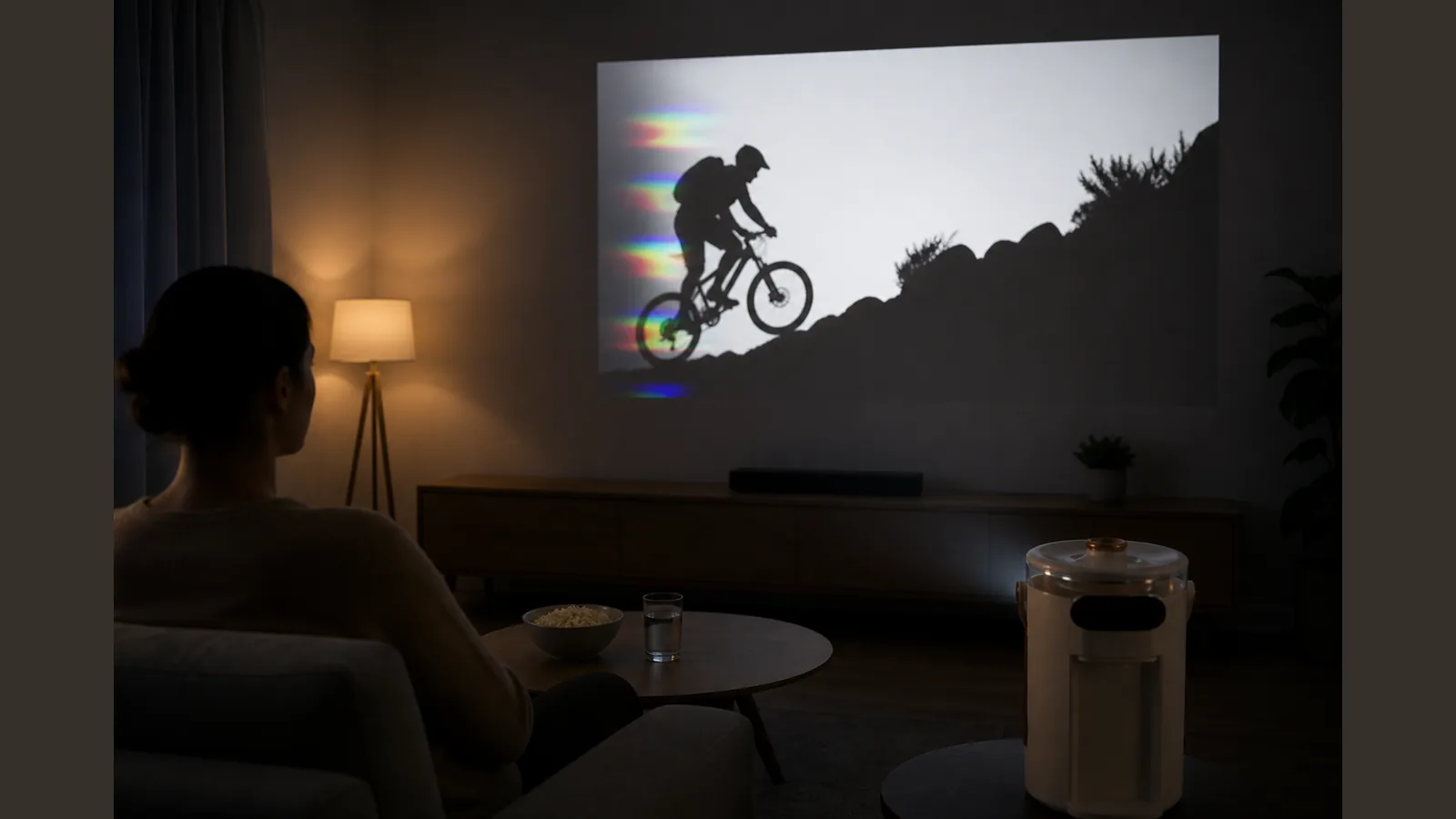
The dlp rainbow effect explained simply is this: on many single-chip DLP projectors, colour is shown in rapid sequence rather than all at once, so some viewers briefly notice thin rainbow-coloured flashes—especially during high-contrast scenes or when they move their eyes. Sensitivity varies from person to person; many people never notice it, while others find it distracting.
How single-chip DLP builds colour in plain English
Single-chip DLP systems typically create a full-colour image by flashing red, green and blue (and sometimes extra segments) in quick succession—often with a colour wheel—while a digital micromirror chip reflects light. Your eye and brain usually blend those flashes into one stable picture. When that blend is imperfect for a particular viewer, brief spectral “rainbow” edges can appear.
That sequential-colour behaviour is why the rainbow effect is associated with single-chip DLP rather than with every projector technology. As Trusted Reviews explains in its DLP rainbow effect overview, the phenomenon comes from sequential colour, and how noticeable it is differs between viewers.
Who notices it and which content triggers it
People who are more sensitive to sequential colour may spot the effect more readily; others may watch for hours without seeing it. There is no reliable way to know from a specification sheet alone whether you will notice it—individual perception matters.
Content that often makes it more obvious includes:
- Bright objects or subtitles against a dark background
- Fast camera pans or quick eye movements across the screen
- High-contrast film and sports scenes with sharp edges
If you are asking “am I sensitive to projector rainbow effect?”, the practical answer is that only a real viewing session—ideally with similar content and room lighting—can tell you.
Practical checks before buying and alternative imaging overview
Before you buy a DLP projector, treat the rainbow effect as a personal-fit check rather than a universal defect:
- Ask for a demonstration with dark scenes, white credits or sports highlights.
- Move your eyes across bright edges on a dark field and note whether brief colour flashes appear.
- If you share the room, have other viewers try the same scenes—sensitivity is not the same for everyone.
- Read product pages carefully for imaging technology wording, and verify brightness, resolution, HDR, DRM and app claims on the listing itself rather than assuming figures from marketing elsewhere.
Consumer projectors mainly use LCD, LCoS or DLP, each with different trade-offs. ProjectorCentral’s guide to LCD, LCoS and DLP imaging technologies is a clear overview if you want to compare how colour is formed. Three-chip or non-sequential approaches generally avoid the classic single-chip DLP rainbow artefact, but they bring their own compromises in size, cost and other image traits—so weigh the whole picture, not one issue alone.
What to do next: if rainbow flashes bother you in a demo, prioritise a different imaging approach or another model you can try in person; if you do not notice them with the content you actually watch, single-chip DLP can still be a practical choice for many homes. Confirm technology type and all performance claims on the product page before you order.
FAQ
What is the rainbow effect on a projector?
It is a brief flash of rainbow-like colours that some people see on single-chip DLP displays because colour is presented sequentially (for example via a colour wheel) rather than simultaneously.
What is the DLP colour wheel rainbow?
“DLP colour wheel rainbow” is everyday language for the same sequential-colour artefact: when eye or scene motion outpaces how colours are blended, thin spectral edges can appear for sensitive viewers.
Does every DLP projector show it?
It is linked to single-chip sequential-colour designs. Not every viewer will notice it, and how often it appears depends on content, contrast and personal sensitivity.
Can I test sensitivity before buying?
Yes—watch high-contrast, fast-moving material on the exact model if possible. That is more useful than relying on second-hand descriptions alone.